

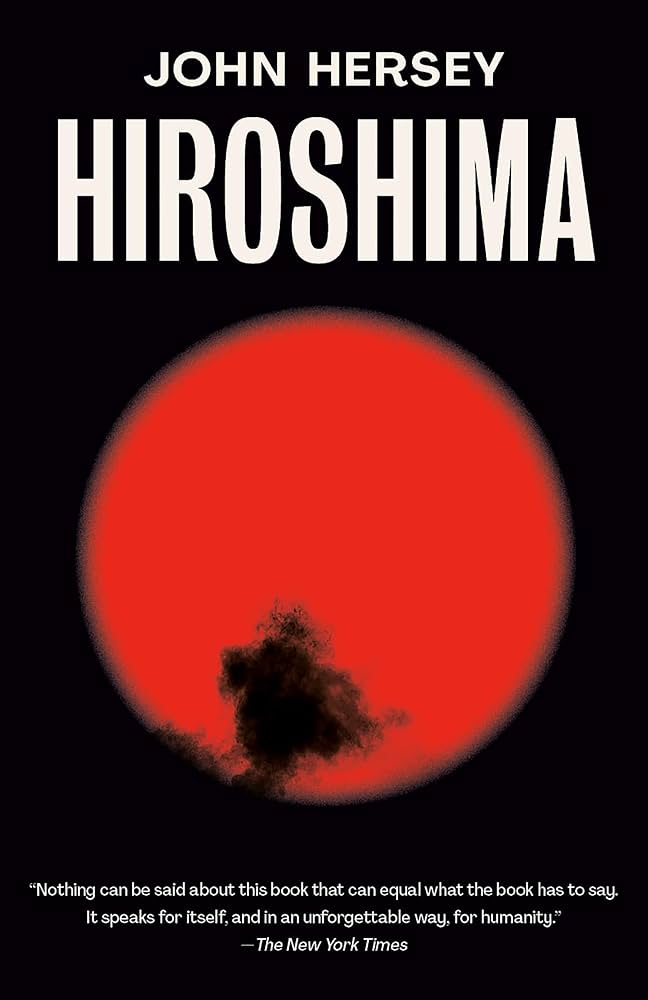
Going on 80 years, John Hersey’s Hiroshima still affects how we think about the human impacts of nuclear weapons.
As August comes to a close, I want to wrap up the month by looking at John Hersey’s eye-opening, first-person account of the Hiroshima bombing. Hiroshima, first published in the August 1946 issue of The New Yorker magazine and soon after as a standalone book, is arguably the best written work to exist that explains the immediate, real, and tangible effects of a nuclear attack. By focusing his story on six survivors from all walks of life, Hersey humanizes the bombing by describing in minute, horrifying detail how everyday people were affected by the attack. In doing so, Hiroshima has had a lasting impact on how the world views nuclear weapons, proliferation, and nuclear issues in general.
Hersey’s wartime role and journalistic background uniquely positioned him to record and share Hiroshima survivors’ perspectives. During World War II, Hersey worked as a correspondent and experienced the events of the Pacific theater firsthand. To Spencer Weart, author of The Rise of Nuclear Fear, Hersey was “obsessed with the human will to survive” and was “unusually qualified to probe Hiroshima’s encounter with mortality” (Weart, 59). When American forces finally made it to the Japanese main islands, Hersey was one of the first Western journalists to view the ruins of Hiroshima. While recording accounts and perspectives of the atomic bombing there, Hersey “faded into the background like a good reporter, giving the hibakusha [atomic bomb survivors] a voice” (Weart, 59). In Hiroshima in August 1945, Hersey was uniquely able to create something that bridged bitter international divides and united people through stories not only of trauma and violence, but also humanity and resilience.
Hersey was also a trendsetter in how survivor stories are told. It was novel at the time to focus journalistic media on eyewitness accounts, especially from a scene of war and violence like Hiroshima. Hersey’s reliance on a variety of lives and experiences of the bombing like a widowed seamstress, a doctor, and a European missionary priest resonated with readers in the United States and elsewhere and humanized the bombing that they had only heard about on the radio. This personable take on international war coverage revolutionized the level of information that people were able to consume, and worked to start changing minds about the use of nuclear weapons.
Hersey’s coverage of the bombing of Hiroshima worked to inform the world of what can happen to cities and people if nuclear weapons were to be used in war. And the consequences of such an act were immediately recognized by many around the world. “As soon as it was announced that things called ‘atomic bombs’ had been dropped, many people questioned the morality of the deed,” Spencer Weart says (58). The bombing fascinated people across the world, and Hersey’s firsthand accounts of Hiroshima’s destruction convinced many that nuclear weapons were immoral and should not be used on others. Weart continues, “Hiroshima inspired more debate than the rest of the war’s destruction put together.” (Weart, 58) Although the firebombings of Tokyo and other populated areas around Japan had not roused dissenters en masse, it was the atomic bomb that began to change minds; Hersey’s Hiroshima made those thoughts real and tangible. As demonstrated by Hersey, Weart articulates the situation well: “It was at this fundamental level that many people began to see nuclear weapons as uniquely immoral.” (Weart, 59)
Hiroshima was a media sensation. Hersey’s survivor perspectives first appeared in an entire issue of The New Yorker before being published as a book. Once again, Weart says it best: “For days it seemed that everybody was talking about Hersey’s report, and soon in the United States and elsewhere newspapers were running the entire text while radio networks read it aloud. It became a best-selling book” (Weart, 59). For millions of Americans eager to consume media about the war and its effects, Hiroshima was a sobering work that brought the horrors of war and nuclear weapons to Americans’ doorsteps thousands of miles away. “His work,” Weart says, “gave people a taste of the Japanese victims’ experience with blast, fire, and radiation sickness.” (Weart, 59)
Hiroshima continues to live on within our collective memory. Without Hersey’s work, an important piece of historical understanding is left unwritten and not learned about. In addition to covering headlines around the world, “Within a few years many high schools were assigning it; the text would remain a favorite of teachers into the twenty-first century.” (Weart, 59) What can be said for sure is that Hiroshima is a necessary work. It is necessary to share the lives, experiences, and perspectives of victims of war. It is equally necessary to inform the world of the costs and consequences behind the use of nuclear weapons. John Hersey’s Hiroshima was the world’s first real, intimate look at how nuclear weapons could thoroughly destroy human life, and forever alter landscapes and communities.